%20(1)_20220516165429_0.png&w=256&q=75)
B.Tech Course Highlights
The B.Tech program is a 4-year full-time undergraduate course designed to help students apply scientific and engineering principles to build practical skills through multiple specialisations, extended internships, and hands-on capstone projects, preparing them for core engineering roles across industries.

4
Year Full Time Program
6+
Specialisations Offered*
10+
Months of Internships*
8
Capstone projects
 Chat With Us
our promise
Kickstart your career with diverse job opportunities

-
150+ Varied job profiles
-
1020+ Unique job opportunities
-
305+ Students with 2+ offers
6+ B.Tech Specialisations
What is the eligibility criteria for B.Tech?
- Passed 12th from a recognised board
- 50% marks in aggregate
- Physics, Chemistry & Maths are compulsory subjects
B.Tech Fee Details
Use the fee calculator to select a college or university and view the applicable program fee instantly. This allows students to compare options and make informed decisions based on campus and course selection.
0 Cost EMI available
Up to 100% scholarship available
Get 200+ assured opportunities with Placement Opportunity Program
Calculate fees
*Terms & conditions apply
 Shortlist Colleges
Choose from 15+ top colleges & make your application process easier!
Key Offerings
 70+ sessions by industry experts and leading faculty
 Capstone projects every semester
 Professional portfolio to increase chances of getting hired
 10 in-demand advanced certifications to choose from
 Seed funding support for budding entrepreneurs
  180+ hours of Mock GD/PI Training
 International/India trips for experiential learning
 Get 200+ assured placement opportunity or get 1st year tuition fee back
Partner Campuses
Choose from 15+ B.Tech Colleges Across India



Get placed where you belong


















The Sunstone Philosophy
helps you learn from the best and provide a hands-on experience so your education is not just limited to theory
Learn from Recruiters
Learn from MDs, CEOs & Founders of leading companies with 10+ years of hiring experience
10+Industry Experts 30+Expert Sessions
Practice in the Real World
Practice the skills you acquire in the classroom through industry internships. Unlock top B.Tech internship opportunities across India.

10+ months of immersive internships
Practice the skills you acquire in the classroom with industry internships

Capstone projects
Application-based industry-relevant projects to make you job-ready from Day 1
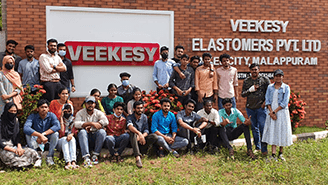
Industry visits
Experience how theoretical concepts learnt in class are put into action
Create your own Portfolio
Increase your chances of getting hired by showcasing your verified skills and experience with a professional portfolio
All your professional work in one place, with easy sharing access
Easy portfolio-building with lifetime free service
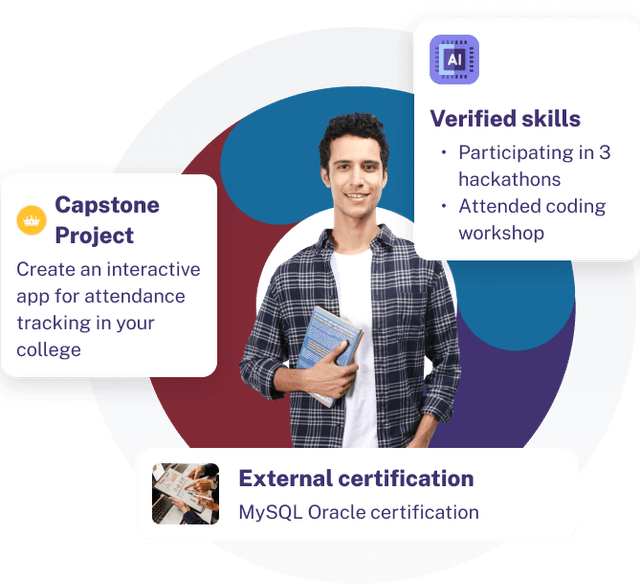
B.Tech Student portfolio
Holistic Learning
Transform your career journey with real-world learning and experiences beyond classroom

Expert Faculty

Global Immersion

Launchpad

Career Success Day
Industry Recognised Credentials
- Credential 1
- Credential 2
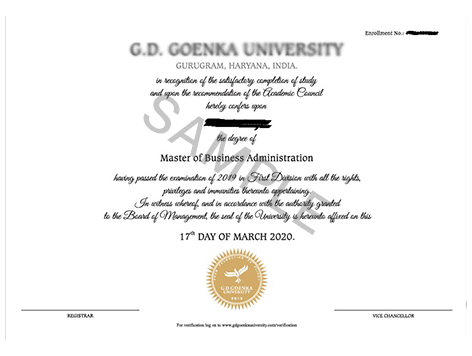
B.Tech Degree
- Earn a UGC-recognised/AICTE-approved degree
- Specialise engineering concepts in chosen field
- Equip yourself with industry-relevant skills
Explore
Life at Sunstone
Cultivate the leader in you with our unique offerings.
Discover our communityOur Success Stories




B.Tech Diaries
Know more about B.Tech programs, syllabus, and colleges with our blogs
B.Tech - Computer Science: A Detailed Guide
By Bhavya Thakkar
27 Jul,2022BTech Civil Engineering - Admission, Eligibility, Syllabus, Exam, Colleges
By
04 Sep,2025B.Tech in Electronics and Communication Engineering: Scope, Course, Jobs, Eligibility, Syllabus
By Bhavya Thakkar
11 Nov,2022B.Tech in Mechanical Engineering: Colleges, Syllabus, Admission, Exams, Jobs
By Bhavya Thakkar
11 Nov,2022
What Is the Sunstone B.Tech Program?
The Sunstone B.Tech is a 4-year full-time undergraduate engineering programme. It is offered through B.Tech campuses under Sunstone. The course combines engineering fundamentals with practical learning, internships, capstone projects, and placement support so students can build technical skills and career readiness together.
Who Should Choose B.Tech After 12th?
B.Tech is a good option for students who want careers in engineering, software, AI, data, cyber security, cloud, core technical roles, or product-based technology fields. It is especially useful for students who want a structured technical degree after Class 12 and want industry exposure along with academics. Students comparing broader engineering routes can also explore engineering courses after 12th.
Who Is Eligible for B.Tech Admission?
Students who have passed Class 12 from a recognised board can usually apply for B.Tech admission. Physics and Mathematics are compulsory, and an approved third subject such as Chemistry, Biology, Biotechnology, or a technical vocational subject is generally accepted. Minimum marks usually fall around 45% to 50%, although some colleges may set higher requirements. Students who want a deeper breakdown can check B.Tech eligibility criteria.
What Subjects Are Required in Class 12 for B.Tech?
For most B.Tech colleges, Physics and Mathematics are mandatory in Class 12. Along with these, students usually need one approved third subject such as Chemistry, Biology, Biotechnology, or a technical vocational subject. This is an important section because subject eligibility is one of the most common student doubts before applying.
What Is the Admission Process for B.Tech?
The B.Tech admission process usually starts with checking eligibility and choosing a preferred campus or college. After that, students submit the application, share academic details, and complete counselling, entrance-based screening, or document verification depending on the admission route. Students who want a fuller roadmap can also read the B.Tech admission guide.
Which Entrance Exams Are Accepted for B.Tech Admission?
B.Tech admissions in India commonly use JEE Main, state-level CETs, CUET in some cases, and university-level entrance tests. The exact route depends on the selected college. Students should therefore check whether their preferred campus accepts national exams, state exams, or direct admission. This matters because entrance-exam requirements can vary a lot across engineering colleges.
Is Direct Admission Possible in B.Tech?
In some private colleges, direct admission may be possible based on Class 12 marks, seat availability, or the institution’s own admission process. However, many engineering colleges still depend on entrance exams for admission. Students should always check the admission route of the selected college before applying.
How Much Does B.Tech Cost at Sunstone?
The total fee for B.Tech depends on the selected college, university, and campus. Across Sunstone-affiliated examples, the approximate tuition range is around ₹3.1 lakh to ₹12 lakh for the full 4-year course, depending on the campus and programme structure. Students should still compare campus-wise fee details before applying. Eligible students can also explore education loan and EMI support while planning their fee payment.
Are Scholarships Available for B.Tech Students?
Yes, eligible students can explore scholarships up to 100%. Scholarship support may vary by campus, so students should check the latest eligibility and benefit details before applying. Students who want to review this option can also check scholarship support for students.
What Practical Learning Is Included in the B.Tech Program?
The B.Tech programme combines classroom learning with practical exposure. Students get internships, capstone projects every semester, professional portfolio support, advanced certifications, mock GD/PI training, and industry-led sessions. Sunstone’s B.Tech content also highlights 10+ months of internships and 8 capstone projects, which makes the programme more useful for students who want hands-on learning instead of theory alone.
What Is Sunstone POP for B.Tech Students?
Sunstone POP is the Placement Opportunity Program. It helps B.Tech students with placement preparation, recruiter access, and job opportunities during the course. Sunstone’s B.Tech pages say students get 200+ opportunities under POP, and some B.Tech content also states that if those opportunities are not provided, the first-year tuition fee is refundable under terms and conditions.
How Does Sunstone Prime Help B.Tech Students?
Sunstone Prime supports students through a structured placement-readiness model from the early semesters. It focuses on assessments, mentorship, training, and continuous improvement so students can prepare better for internships and final placements. This is useful for B.Tech students because technical hiring often depends on both subject skills and placement readiness.
How Should Students Compare B.Tech Colleges Before Applying?
Before choosing a B.Tech college, students should compare eligibility, fee range, entrance route, internships, practical learning, placement support, recruiter access, and campus location. They should also look at whether the college offers the specialisation they want and whether the learning model is more theory-based or career-focused. Students who want a broader comparison angle can also explore Sunstone vs other private colleges for B.Tech.
What Career Options Can Students Explore After B.Tech?
After B.Tech, students can explore roles such as software developer, data analyst, AI/ML engineer, cloud associate, cyber security analyst, design engineer, testing professional, and other technical or engineering profiles depending on their specialisation. Students who want to review role paths in more detail can also check B.Tech career scope and opportunities.
What Is the Average Salary After B.Tech?
B.Tech salary depends on the role, specialisation, skills, company, and college. The main B.Tech page gives a general average starting salary of around ₹2.4 lakh per annum for B.Tech graduates in India, while a Sunstone B.Tech placements article says the top 25% of Sunstone students secured an average package of ₹7.1 LPA and the top 50% received offers above ₹5.6 LPA. A safer way to explain salary is to present it as role- and performance-dependent rather than fixed. Students can also review B.Tech fees, placements, and salary trends.
Is B.Tech Better Than B.E. for Some Students?
B.Tech and B.E. have equal recognition in the job market, but they are often described differently in terms of learning style. B.Tech is commonly seen as more practical and application-oriented, while B.E. is often seen as more theory-oriented. Students comparing both options can also check the difference between B.E. and B.Tech.
Is B.Tech Worth It After 12th?
B.Tech can be a strong option for students who want to build technical skills, work in engineering or software roles, and gain long-term career scope in technology-driven industries. It is especially useful for students who want internships, technical problem-solving exposure, and stronger placement opportunities after graduation. For many students, the value of B.Tech depends on the college, specialisation, practical learning model, and placement ecosystem.
B.Tech Summary
- B.Tech, also known as Bachelor of Technology, is one of the most widely pursued undergraduate technology and engineering programs in India. It is designed for students seeking careers in core engineering and technology-driven fields.
- According to estimates, nearly 15 lakh engineering students graduate every year in India after completing their B.Tech degree, making it one of the largest higher-education programs in the country.
- The standard duration of a B.Tech course is 4 years, typically divided into 8 semesters, although the exact structure may vary depending on the university or college.
- The average starting salary for B.Tech graduates in India is around ₹2.4 lakh per annum, which may vary based on specialisation, institution, job role, and industry.
Frequently Asked Question
- What is a B.Tech course?
A B.Tech (Bachelor of Technology) is a four-year undergraduate engineering degree recognised by UGC and regulated by AICTE. It focuses on applying scientific and technical knowledge to engineering, technology, and industrial problem-solving.
- Is B.Tech a 4-year course?
Yes, B.Tech is usually a 4-year course divided into 8 semesters. Diploma holders may get lateral entry in some colleges.
- Who can apply for B.Tech admission after 12th?
Students who have completed Class 12 with Physics and Mathematics can usually apply for B.Tech. An approved third subject and minimum marks are also commonly required.
- What subjects are compulsory for B.Tech?
Physics and Mathematics are compulsory for most B.Tech admissions. A third subject such as Chemistry, Biology, Biotechnology, or a technical vocational subject is also usually accepted.
- What is the minimum percentage required for B.Tech?
Most colleges commonly require around 45% to 50% marks in Class 12, although the final requirement may vary by college and category.
- Which entrance exams are accepted for B.Tech?
Common exams include JEE Main, state CETs, CUET in some colleges, and university-level entrance tests.
- Is direct admission possible in B.Tech?
Yes, some private colleges offer direct admission based on Class 12 marks or their own admission process. However, many colleges still use entrance exams.
- How much does B.Tech cost?
B.Tech fees vary by campus and college. Across Sunstone-affiliated examples, the approximate tuition range is around ₹3.1 lakh to ₹12 lakh for the full course.
- Are scholarships available for B.Tech students?
Yes, eligible students can explore scholarships up to 100%, depending on campus and programme terms.
- Does B.Tech include internships and projects?
Yes, B.Tech commonly includes internships, capstone projects, certifications, and practical learning. Sunstone’s B.Tech content also highlights 10+ months of internships and multiple capstone projects.
- What jobs can students get after B.Tech?
After B.Tech, students can explore software, data, AI, cloud, cyber security, core engineering, testing, and product-related roles depending on their specialisation.
- What is the average salary after B.Tech?
The average starting salary after B.Tech depends on the specialisation, industry, and skill set. IT and technology-related roles generally offer higher entry-level salaries compared to some core engineering fields. Salaries typically increase with experience.
- Is B.Tech better than B.E.?
Both degrees have equal recognition. B.Tech is often seen as more practical, while B.E. is often seen as more theory-oriented.
- What is Sunstone POP?
Sunstone POP is the Placement Opportunity Program. It is designed to support students with placement preparation and job opportunities.
- What is Sunstone Prime?
Sunstone Prime is a premium program that offers enhanced benefits like advanced training, better placement support, and access to top recruiters. It is designed for students who want stronger career outcomes and higher salary opportunities.
APPLY FOR UG AND PG PROGRAMS
Enter a world of
Possibilities